
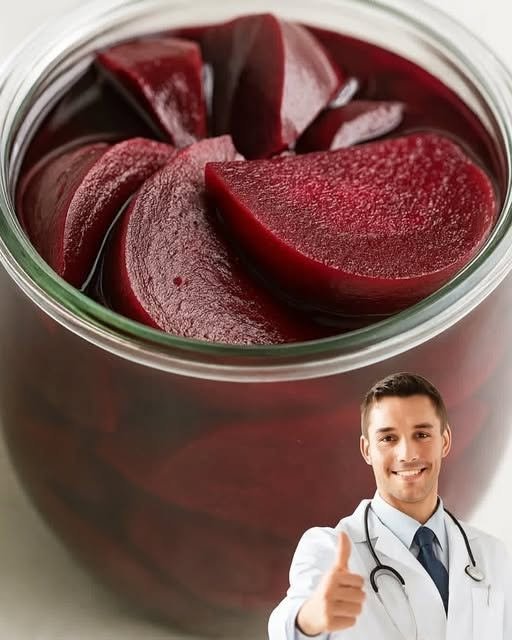
One of the funniest things about beets is that their strongest feature—their incredible color—can also make people think something is wrong.
Red urine.
Red stool.
Brightly colored cooking water.
Deep purple stains on cutting boards.
All of these can make a person wonder what happened.
But beet pigments are powerful natural compounds.
The dramatic color doesn’t necessarily mean anything dangerous is happening.
Still, context matters.
If you notice blood in your urine or stool and haven’t eaten beets recently, don’t assume it’s beet-related.
And even after eating beets, persistent or concerning symptoms deserve medical attention.
Vì sao bác sĩ cảnh báo không nên ăn quá nhiều củ dền?
How Much Should You Eat?
There isn’t one universally appropriate amount of beets for everyone.
A moderate serving can easily fit into a balanced diet.
You don’t need to consume huge amounts to make beets “work.”
In fact, eating a wide variety of vegetables is generally more useful than focusing excessively on one particular food.
Try rotating beets with foods such as:
Spinach
Broccoli
Carrots
Bell peppers
Tomatoes
Cabbage
Sweet potatoes
Different vegetables provide different combinations of nutrients and plant compounds.
Variety is the real advantage.
The Bigger Picture Matters Most
It’s easy to become fascinated by one food and ask whether it can transform your health.
But nutrition doesn’t work that way.
Eating beets while consuming an otherwise highly processed diet won’t magically cancel out unhealthy habits.
Likewise, not eating beets doesn’t mean you’re missing a miracle food.
What matters most is your overall dietary pattern.
A diet rich in vegetables, fruits, whole grains, legumes, nuts, seeds, and appropriate protein sources can provide a broad range of nutrients.
Beets can simply be one colorful piece of that larger picture.
The Bottom Line
Eating beets can produce some genuinely surprising effects.
Your urine or stool may temporarily turn red or pink. Their fiber can support normal digestion. Their natural nitrates may contribute to nitric oxide production and have been studied for effects on blood pressure and exercise performance. Their betalain pigments provide antioxidant plant compounds.
At the same time, beets aren’t a miracle cure.
People with certain medical conditions—particularly those involving kidney stones or dietary mineral restrictions—may need individualized advice.
And if you’re taking medication for a medical condition, don’t replace prescribed treatment with dietary changes without discussing it with your healthcare professional.
For most people, though, beets are simply a nutritious, colorful vegetable that can add variety to meals.
So the next time you slice into a beet and notice that unmistakable crimson color, don’t be surprised if your body leaves a little evidence behind.
Sometimes the most unexpected effects of a healthy food are also the most harmless ones.
